Hi! I’m Liz
Welcome to my website! My name is Liz and I am an Astrophotographer based in the land down under, Australia.
Ever since I was little, I’ve always thought space was incredibly interesting and I enjoyed those semesters in primary school where the focus was the Solar System. While I went on to complete a Bachelor of Arts majoring in Criminology, used my spare units to take a course called ‘Planet Earth: The Big Picture’. I got to connect with some awesome classmates who had similar interests and even reached out to my lecturer to let him know about my experience with astrophotography and had my images displayed in some of the lecture slides!
As I mentioned in the home page, my journey started in October of 2023. I had made a friend online through gaming. He also had an interest in space and had a planetary telescope at the time. The two of us took a drive to find some darker skies to use his scope and checked out planets that were available at that time of year. After that, I did some research online and found out that imaging space is possible! I checked out what stores nearby sold equipment and found a store on the other side of the city and spent all day learning about telescopes, cameras, mounts and more.
The next 6 months was a struggle, while I had a rough idea of how to polar align my telescope, I really struggled to get it to work correctly and spent the first 6 months trying to figure it out, it was a bit overwhelming. Eventually I joined my local astronomy club (SEQAS: South East Queensland Astronomical Society). I went to one of their free events called Urban Observers where I got to make some strides on how to do star alignments. After that, I went back and was shown how to do a proper polar alignment.
After learning how to polar align, I went to my local park, set up my scope, attached my 750D DSLR Canon camera to my scope, and attached an auto clicker, slewed to Orion and Running Man, and spent the night capturing the star light. Below is the first ever image I captured, with the above set up.
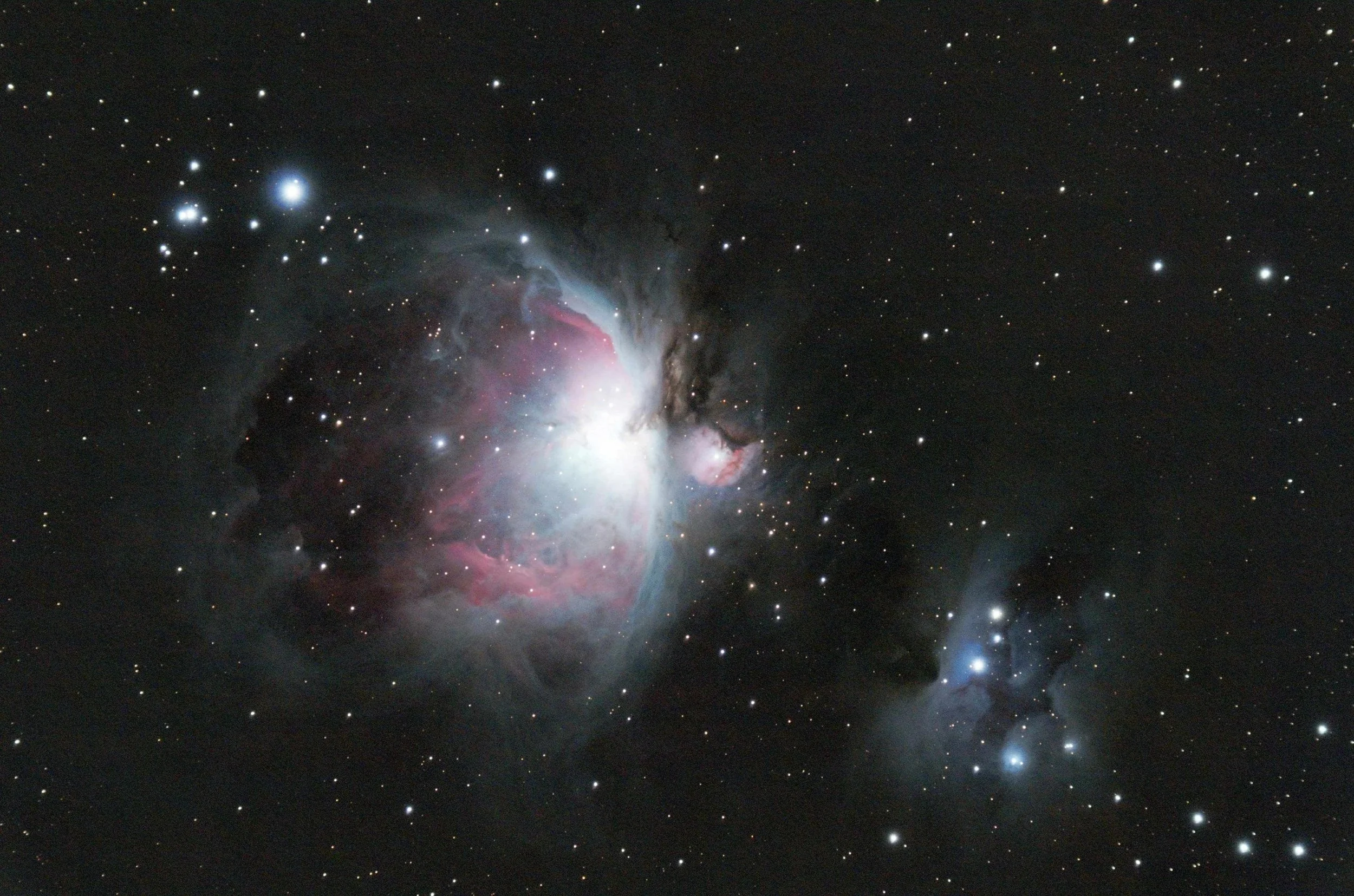
This image was huge for me. I was so impressed with how much was visible with such small amount of data. And this image proves that you don’t need expensive equipment to image the cosmos.
After imaging Orion, I went on to capture the moon, and Carina. Carina was much harder for me to edit due to the nebula not being as bright as Orion. I ended up seeking help from other Astrophotographers online through Facebook groups and began to pick up some skills.
From then on, I moved onto automating my set up with equipment from ZWO. My first astro dedicated camera was the ZWO 585MC Pro. This produced amazing images. I spent 6 months learning how to edit properly with Pixinsight and mastering how to use equipment from ZWO before moving onto monochrome imaging which really changed the game.
Since then, I’ve become a committee member for my club, advanced my astrophotography skills, and even entered into a number of astrophotography competitions this year and plan to do more in the future.
My goal is to encourage more individuals to take the time to look up at the sky and understand exactly what kind of universe we are apart of, teach others how to get involved and learn the skills to image the cosmos for themselves, provide a safe space for questions to be asked and constructive feedback to be provided. Lastly, I eventually want to be able to share my images with those who want to decorate their walls with images of our space neighborhood.

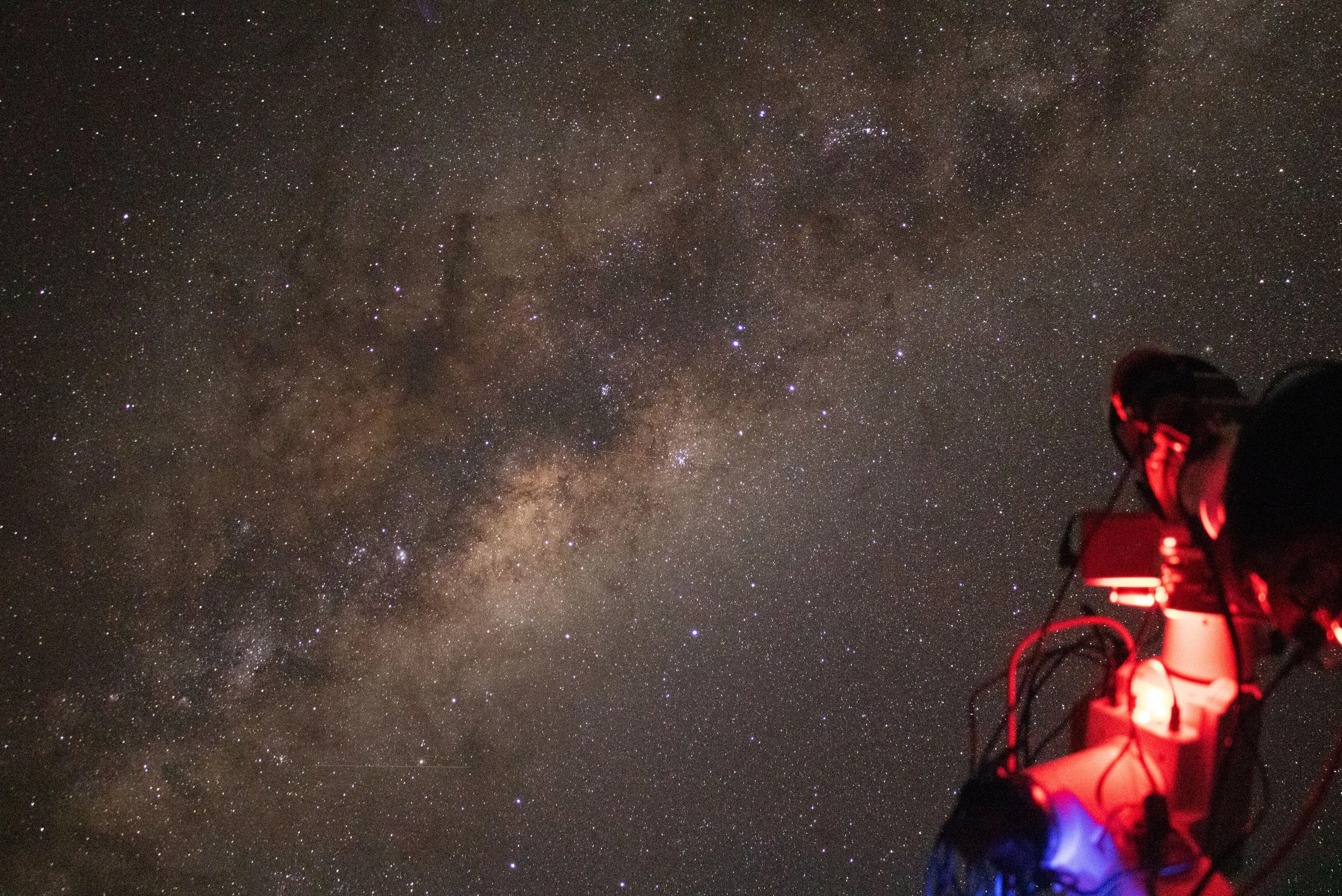
Meet the Team
Take a minute to check out the team behind capturing those photons
-
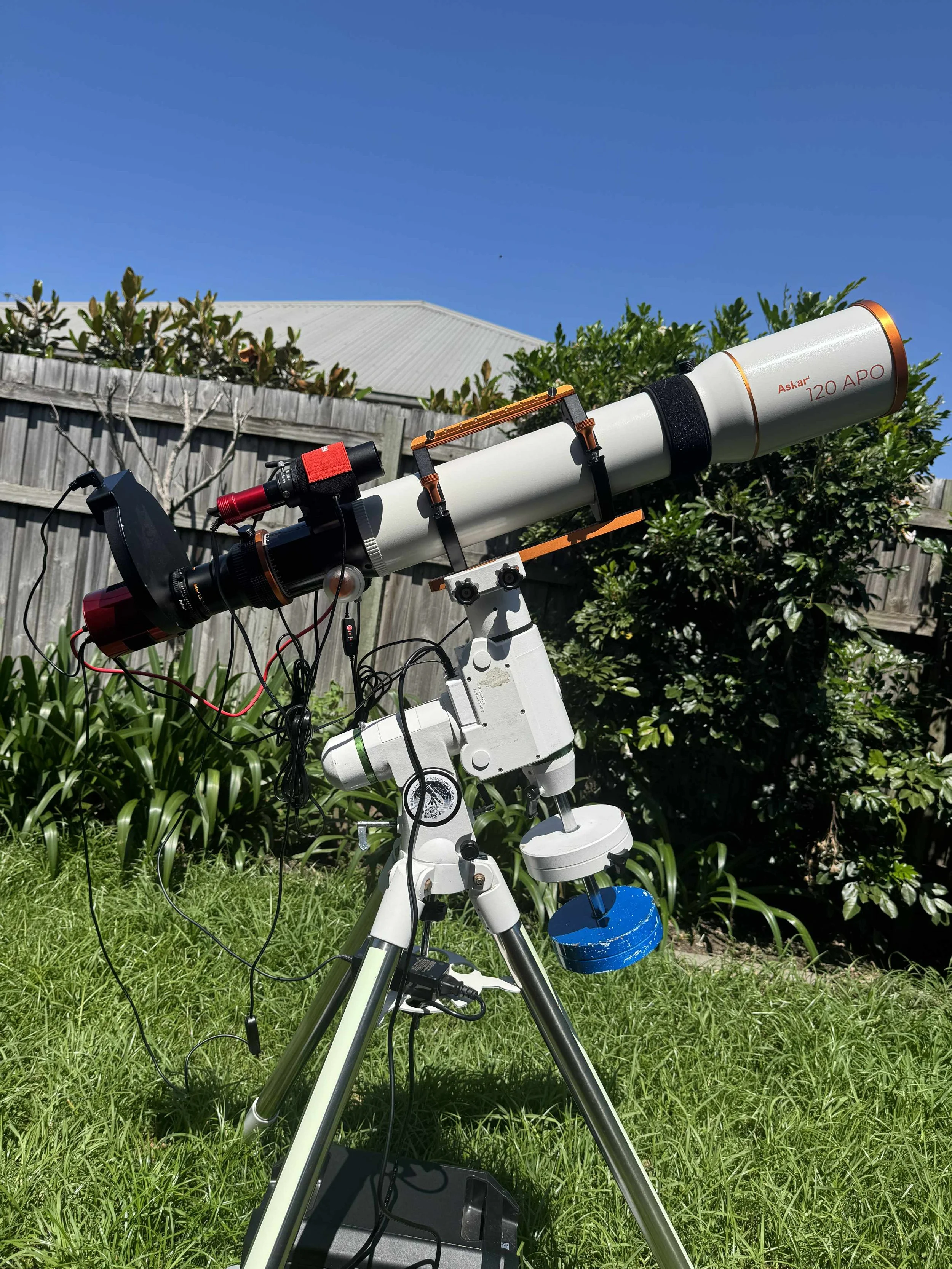
ASKAR 120APO
Triplet Refractor
This telescope is an apochromatic ED triplet, with a focal length of 840mm and diameter of 120mm, at a focal ratio of f/7. This scope can be used with a 1x reducer, keeping the scope at its native legnth, or the 0.8x reducer, bring the scope down to 672mm.
-
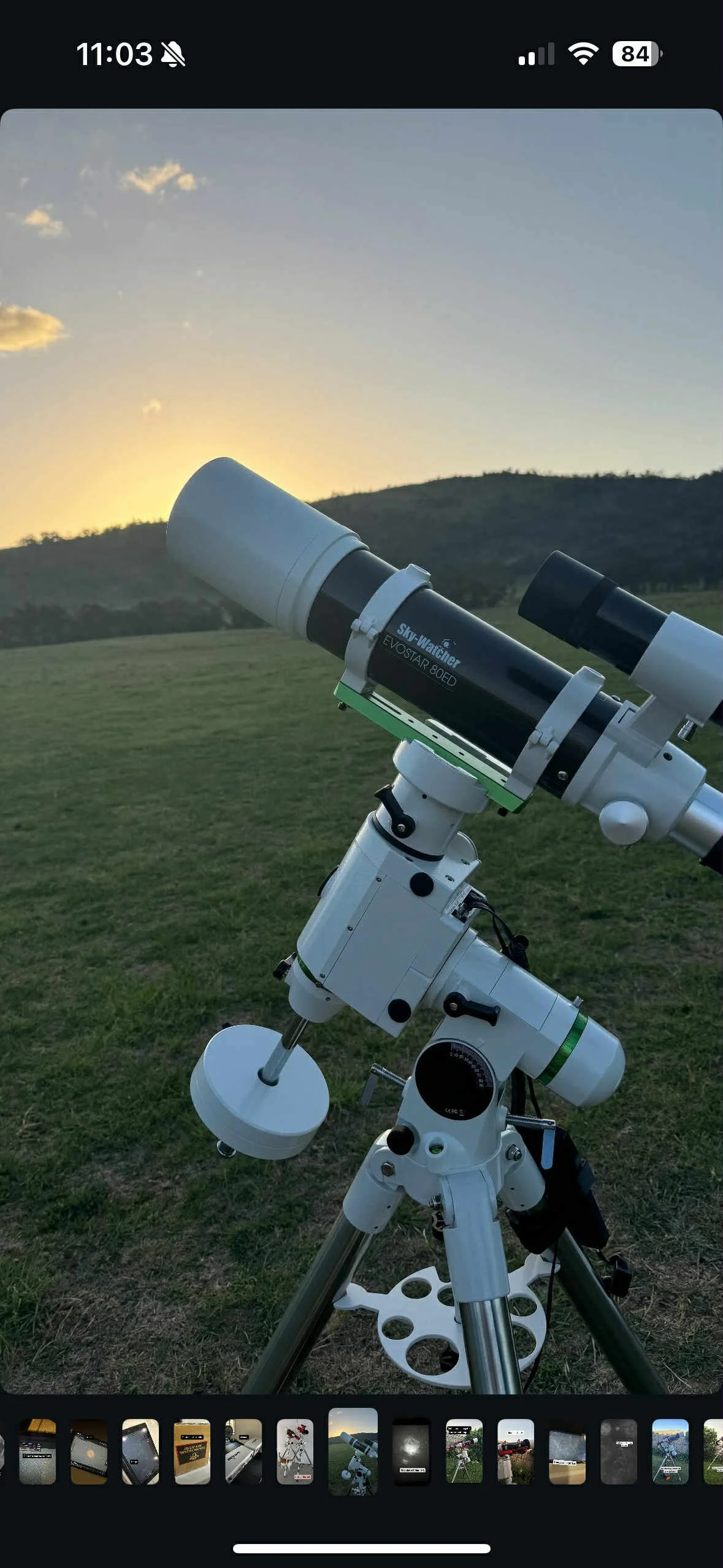
SKYWATCHER EVOSTAR 80ED
Doublet Refractor
This telescope is an apochromatic ED doublet, with a focal length of 600mm and diameter of 80mm, at a focal ratio of f/7.5. This scope is used with a 0.85x reducer, taking the scope down to 510mm.
-
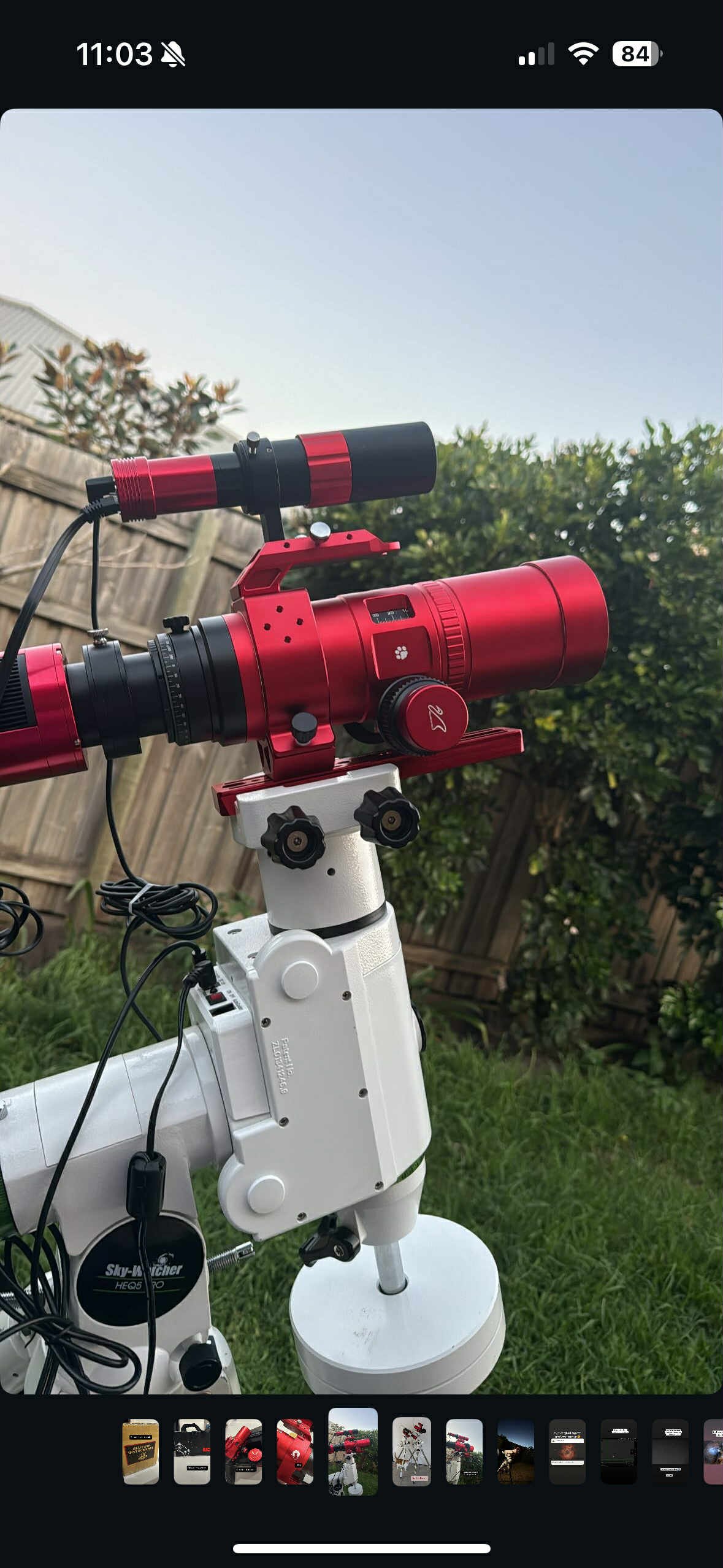
WO REDCAT 51-III WIFD
Petzval Quadruplet
This telescope is a apochromatic Petzval quadruplet with a focal length of 250mm and a diameter of 51mm. No reducer is required due to the design of the Petzval. Used as a wide field rig.