Messier 67 - King Cobra Open Cluster
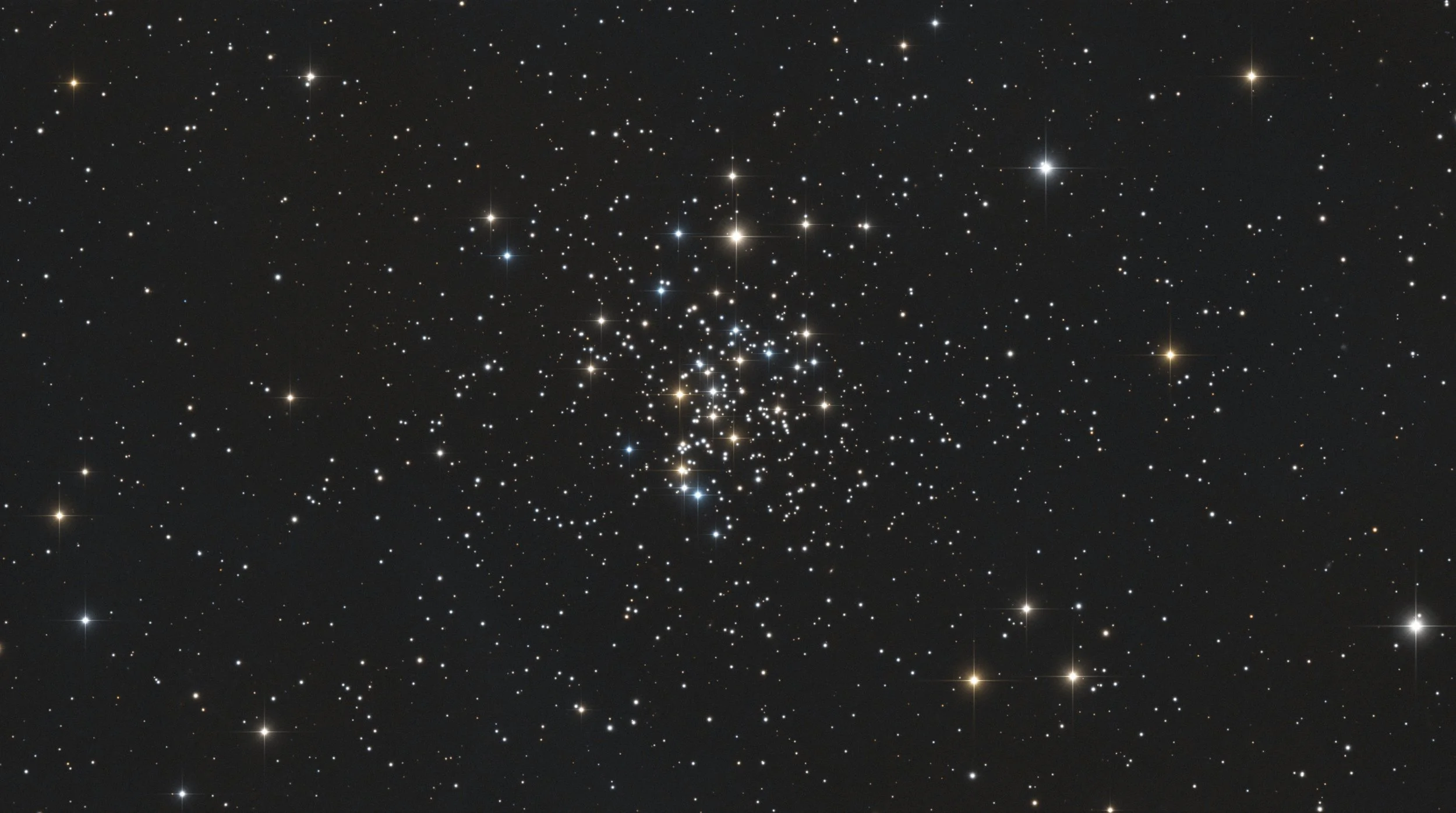
Messier 67 (M67), also known as the King Cobra Open cluster, was first recorded in observations around 1779 by Johann Gottfried Köhler. It was later observed by Charles Messier in April of 1780. Messier described the object as a cluster of small stars with nebulosity, adding it as Messier 67 to his catalogue. It is also listed in the New General Catalogue as NGC 2682.
Open Cluster
An open cluster refers to a group of stars that have formed in the same region, from the same molecular cloud, loosely bound by gravity. Stars that have formed in molecular clouds are mostly of a similar age and made up of similar compositions. These groups of stars generally contain anywhere from a few dozen to a few thousand stars that can be spread over a distance of up to 30 light-years, though this is considered irregular. Open clusters, on a galactic scale, are short-lived occurrences due to gravitational interactions with other stars and tidal forces of the Milky Way. Generally speaking, open clusters last only for a few million years. However, in the case of Messier 67, it is estimated to be about 4 billion years old, much older than a typical open cluster. These objects are commonly found within the galactic disk, where most of the star-forming activity is still very active.
Globular clusters differ from open clusters because globular clusters are very tightly bound stars, spherical in shape, and very old. In some cases, globular clusters are considered to be failed galaxies. In short, open clusters could be described as a stellar family, born together in the same location and sharing similar chemical compositions.
Location
Messier 67 is located in the constellation of Cancer; Messier 44 is also located in Cancer. Messier 67 is considered to be relatively close to Earth, lying about 2,700-2,900 light-years away.
In the Southern Hemisphere, it is best observed in March.
Annotated Image
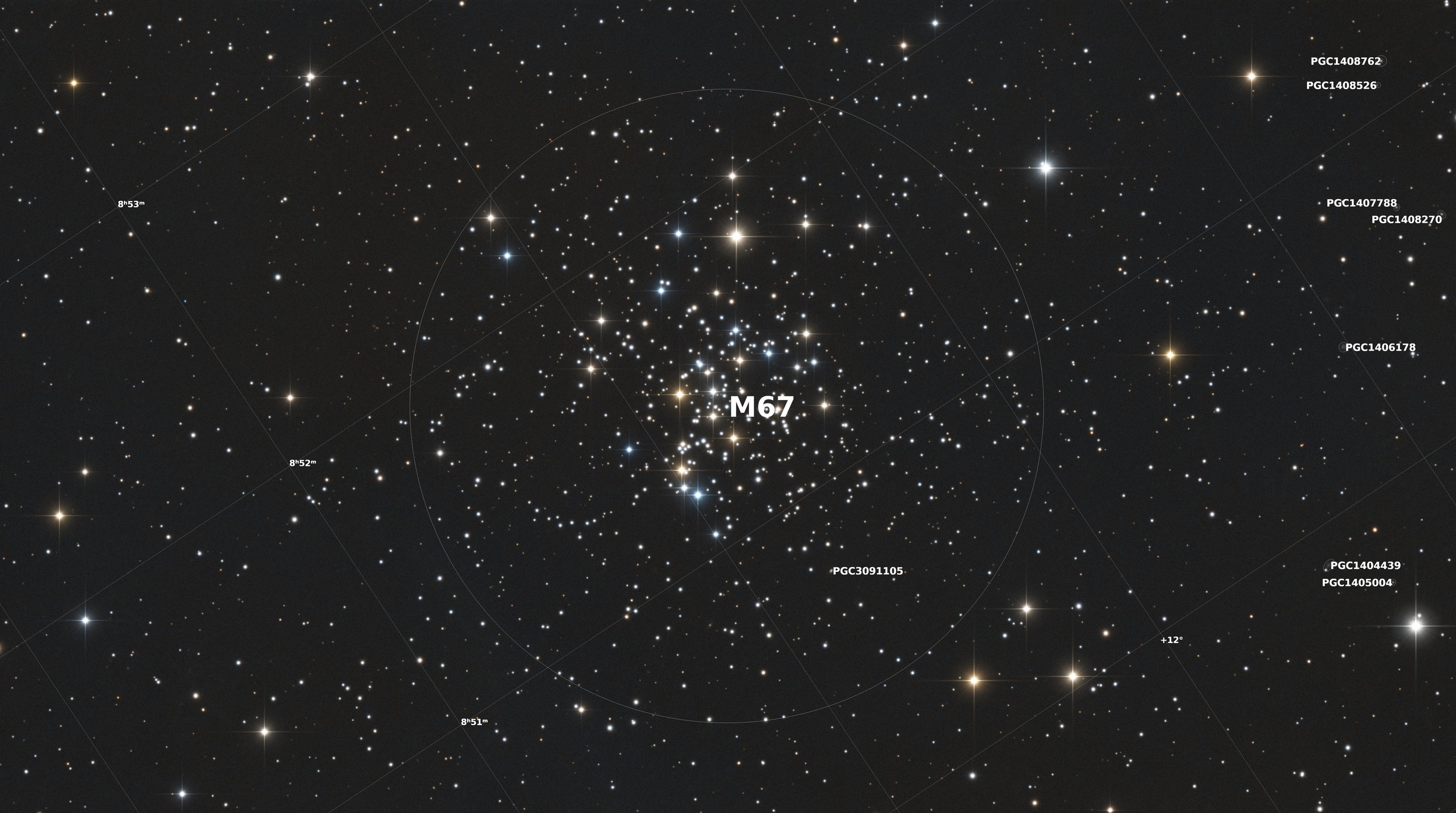
This image contains several background galaxies, PGC 1405004, PGC 1404439, PGC 1406178, PGC 1408270, PGC 1407788, PGC 1408526, and PGC 1408762. These galaxies are listed in the Principal Galaxies Catalogue, a large catalogue of galaxies that was compiled in 1989. There is no information about these galaxies that has been published.
Stars in Messier 67
Messier 67 contains several distinct types of stars. Firstly, main-sequence stars, which are still fusing hydrogen in their cores, and many of these are considered to be sun-like stars (G-type or smaller being K-type). These stars are more dominant in the cluster and are yellow-white in colour. This open cluster also has a large number of red giants due to its age.
There are also some stars known as blue stragglers, which are considered to be relatively rare. They are a very interesting star type, as instead of progressing from the main sequence and going on to become either a giant or a supergiant, they have been given extra fuel, making them appear as young, massive stars. This process can happen in several ways, such as a star merger, where two stars come together, or possibly from mass transfer in a binary system, which means one star is stealing material from its companion star. This is interesting because while there are around 500 stars considered to be part of this open cluster, a number of them are binary stars. A binary star is two stars that are bound to one another and are orbiting a common centre.
White dwarf stars are also within Messier 67; these are what remains of low to intermediate-mass stars that have shed their outer layers and are no longer in the process of nuclear fusion. These stars are faint and will be cooling over time.
Let’s Test the Science
Understanding the Diagram
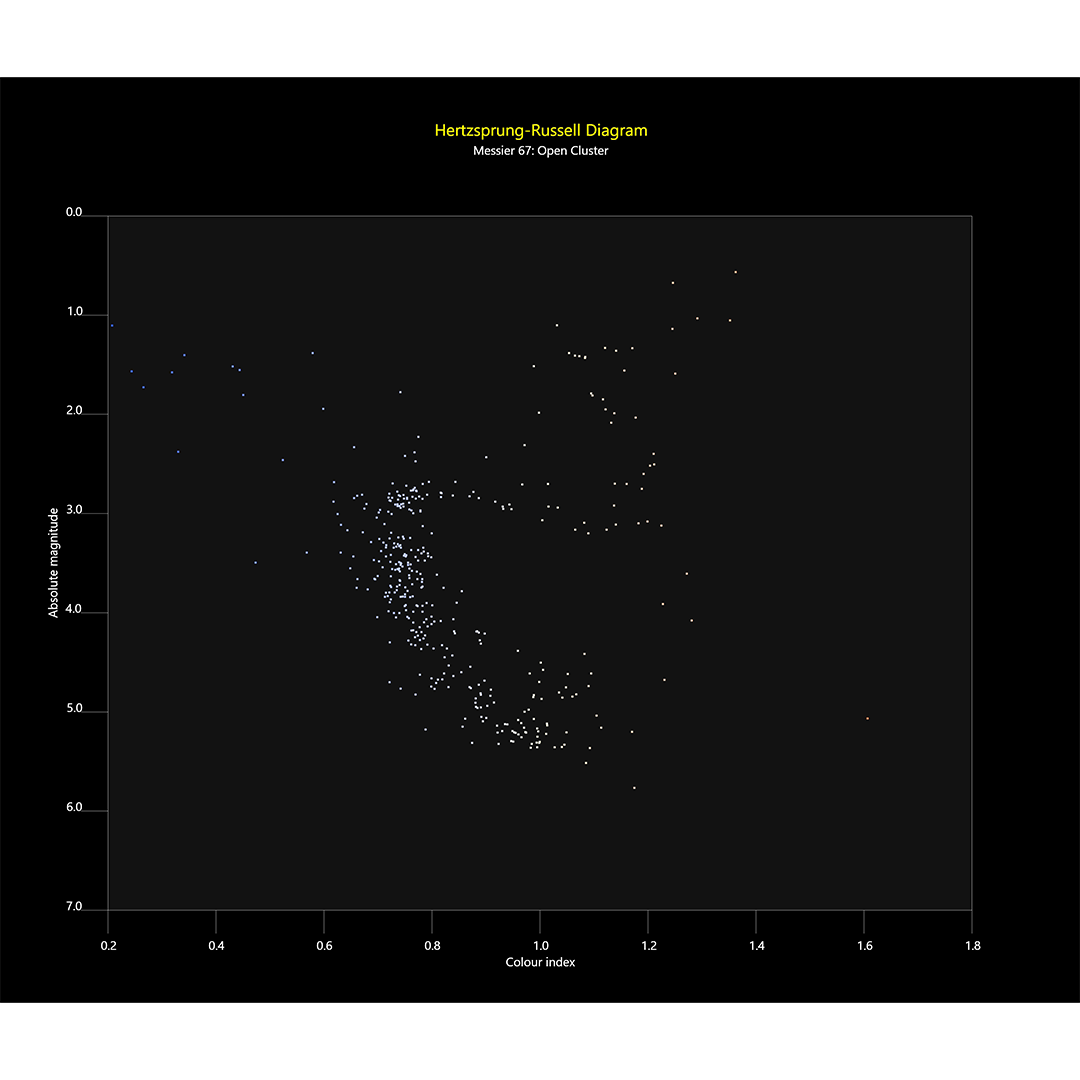
Main Sequence Stars: These appear on the graph as a diagonal group from top left to the bottom right. Described as sun-like stars within this region of the diagram.
Giants and Super Giants: These stars appear on the top right. Given they are giants/supergiants, they are massive stars but are not very hot compared to other types of stars.
White Dwarfs: Hot, but very dim and very small stars.
As mentioned previously, this open cluster mainly consists of main-sequence stars, as supported in the above diagram. Many of the stars are plotted along the diagonal line running from top left to bottom right. It was also mentioned earlier that there are stars called blue stragglers in this open cluster. These star types appear on the diagram in the very top left, looking sort of out of place. The red supergiants are also plotted here, on the top right side of the diagram.
Because Messier 67 is such an old cluster, the diagram shows a well-defined main-sequence turnoff point. This indicates that higher-mass stars have exhausted their core hydrogen and evolved into giant stars. This is how scientists can understand the age of the open clusters
Things to consider about the above diagram, however, you might notice that the stars seem to drop off at about 5.5 magnitude. This is due to the scope/camera limitation. Telescopes can only see so much. Also, due to white dwarfs being very dim stars, they’re not likely to appear with amateur equipment.
Equipment
Telescope: SkyWatcher Evostar ED80
Mount: HEQ5-Pro (belt modified)
Camera: ZWO ASI585MM PRO
Filters: Antlia L, R G B V-pro Series
Filter Wheel: ZWO EFW
Focuser: ZWO EAF
Computer: ZWO ASI AIR Pro
Guide Scope: ZWO 120MINI
Guide Camera: ZWO 120MM
Dew Heater: SV-BONY Dew Heater
Battery: Powertech 1,000WH
Capture Details
Light Frames:
RED: 180 seconds x 20 frames
GREEN: 180 seconds x 20 frames
BLUE: 180 seconds x 20 frames
Total: 3 hours
